


Pradhan Mantri Awas Yojana Gramin Online (PMAYG)
Pradhan Mantri Awas Yojana Gramin (PMAY-G) is the Government of India's flagship rural housing scheme providing financial assistance to eligible rural households for building pucca houses with basic amenities. Launched in 2016 and extended to 2028–29 with a cumulative target of 4.95 crore houses, the scheme offers Rs.1.20 lakh for plain areas and Rs.1.30 lakh for hilly/north-eastern states through Direct Benefit Transfer (DBT).
Features of Pradhan Mantri Awaas Yojana Gramin (PMAYG) Scheme
The main features of the PMAYG scheme are given below:
- Eligible Beneficiaries: Eligible beneficiaries are determined based on both SECC 2011 data and Awaas+ survey return data, rather than just BPL status. The eligible list of beneficiary families have been validated and approved by the Gram Sabha with priority given to families with no house and families living in kuchha or deteriorating houses.
- Housing Units: The housing unit is to be provided with financial assistance for the construction of pucca houses with a minimum size of 25 sq. metres. Each unit will also have an associated hygienic cooking area.
- Financial Assistance: The amount of assistance provided is Rs.1,20,000 for plain areas and Rs.1,30,000 for hilly and difficult areas and for IAP. The assistance is disbursed in instalments through Direct Benefit Transfer (DBT) to the beneficiary’s bank or post office account linked to their Aadhaar.
- Cost Sharing: Funding for this scheme will be shared at 60:40 between the Central Government and State Governments for plain areas. For the North-Eastern and Himalayan States, it will be 90:10 and for Union Territories without a legislature, it is 100% funded by the Central Government.
- Convergence with Other Schemes: PMAY-G converges with schemes such as the Mahatma Gandhi National Rural Employment Guarantee Act which provides for 90/ 95 days of unskilled wage employment; Swachh Bharat Mission Gramin which provides Rs 12,000 for toilet construction and similar support to other schemes such as drinking water, electricity and LPG connections (eligibility criteria apply) and Livelihood Support Programmes.
House Size Standards for PMAY-G
PMAY-G targets rural households without housing or living in deteriorated structures, supporting construction of pucca houses meeting government standards. The scheme's minimum house size requirement was raised from 20 square metres to 25 square metres to ensure adequate living space and basic amenities including a hygienic cooking area.
PMAYG Official Details 2026
Category | Details |
Toll-Free Helpline | 1800-11-6446 (PMAY-G Support) 1800-11-8111 (PFMS/Payment Support) |
Email for Complaints / Suggestions | support-pmayg@gov.in(General support) helpdesk-pfms@gov.in (Payment/financial system issues) |
Official Mobile App | Awaas+ / AwaasSoft App (Available on Google Play Store; used for authentication and geo-tagging) |
Beneficiary Registration Manual | Available under ‘Documents’ section on the official website |
Pradhan Mantri Awaas Yojana Gramin (PMAYG) Eligibility Requirements
The following are the eligibility criteria, which include specific deprivation scores and different priority lists:
- Basic Housing Eligibility
To qualify for assistance under this scheme, an applicant must reside in a household located in a rural area that has no housing or is currently living in a kutcha dwelling with 0, 1, or 2 rooms made from non-permanent materials (kutcha walls and roof). This scheme is intended solely for families without adequate housing. Assistance cannot be granted to families residing in pucca (permanent) dwellings.
- Priority/Final Selection Process
Automatic Inclusion Categories: Households belonging to any of the following categories are automatically included for consideration under PMAY-G:
- Houseless households
- Destitute households or persons living on alms
- Manual scavenger families
- Particularly Vulnerable Tribal Groups (PVTGs)
- Legally released bonded labourers
After identification, eligible households are prioritised and verified through the SECC 2011 database, Awaas+ survey data and Gram Sabha approval processes.
Factors that will exclude Beneficiaries from PMAY Gramin Scheme
When an applicant's housing condition has been determined to meet the requirement, households may be disqualified due to their perceived higher socio-economic situations, regardless of their actual housing status.
Disqualifying conditions include
- ownership of a vehicle,
- possessing a Kisan Credit Card for Rs.50,000 or more,
- having a family member currently working for the Government of India,
- household's gross monthly income exceeds Rs.15,000
- paying income tax/professional tax,
- family owned a refrigerator or landline phone,
- Family which owns more than 2.5 hectares of irrigated land.
Documents Required to Apply for Pradhan Mantri Awaas Yojana Gramin (PMAYG)
The government identifies eligible families first. If you are identified, you will then need to provide the following documents:
- Aadhaar number
- Consent document to use Aadhaar on behalf of the beneficiary
- MGNREGA-registered beneficiary job card number
- Swachh Bharat Mission (SBM) number of the beneficiary
- Bank account details
How to Apply/Register/Add Pradhan Mantri Awaas Yojana Gramin (PMAYG) Beneficiary
Beneficiary registration under PMAY-G involves four key sections: personal details, bank account information, convergence scheme details (MGNREGA and Swachh Bharat Mission), and final office verification. The process is completed online via the official PMAYG portal and requires Aadhaar authentication, bank account linkage, and consent documentation.
To successfully register or add the beneficiary, follow the steps given below:
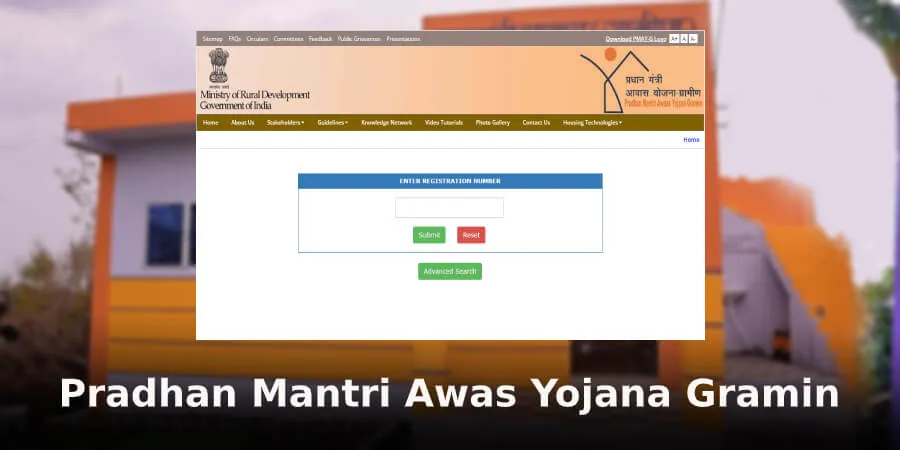
- Visit the official website for login PMAYG.
- Fill in the details required in the personal details section (such as gender, mobile number, Aadhaar number, etc.)
- Upload the consent form required to use the Aadhaar number
- Click on the search button to find the beneficiary name, PMAY ID, and priority.
- Click on ''Select to Register''.
- The beneficiary details will be automatically generated and displayed.
- The remaining beneficiary details can now be filled in, such as ownership type, relation, Aadhaar number, etc.
- Upload the consent form required to use the Aadhaar number on behalf of the beneficiary
- In the next section, add the beneficiary account details in the required fields, such as beneficiary name, bank account number, etc.
- If the beneficiary wants to avail a loan, select ''Yes'' and enter the required loan amount.
- In the next section, enter the MGNREGA job card number and Swachh Bharat Mission (SBM) number of the beneficiary
- The next section will be filled in by the concerned office
PM Awaas Yojana Gramin (PMAYG) Beneficiary Registration Guide
The beneficiary selection process defined under the Pradhan Mantri Awas Yojana Gramin (PMAY-G) is structured around transparency, fairness, and objective identification of eligible rural households.
- Data Identification: The initial list of potential beneficiaries is created using official government databases, namely, the Socio-Economic and Caste Census (SECC) data from 2011 and information collected from the Awaas+ survey, which includes households who were excluded from the original SECC list but qualify for assistance under the programme criteria.
- Deprivation-Based Ranking: Households identified in the database will be automatically ranked based on their socio-economic deprivation according to data gathered during the SECC and the Awaas+ survey. Households that have the greatest vulnerability to housing and are most socially disadvantaged will receive the highest level of priority in the ranking process.
- Gram Sabha Verification: Once the provisional list is complete, it will be presented to the Gram Sabha for community-level verification. During this stage, villagers have the opportunity to raise disputes and make corrections to the list to ensure only households that qualify remain on the final list.
- Permanent Wait List (PWL): After verification and correction processes are complete, a Permanent Wait List will be compiled and published.
- Annual Selection: Once the Permanent Wait List has been prepared, yearly housing targets will be used to select beneficiaries for each financial year from the Permanent Wait List.
Finding your Beneficiary Status:
You can verify your name in the beneficiary list under Pradhan Mantri Awas Yojana Gramin (PMAY-G) by following these step-by-step instructions:
- Step 1: Visit the Official Portal
- Step 2: Open Reports Section: On the homepage, move your cursor to ‘Awaassof’ in the top menu. From the dropdown, click on ‘Reports.’
- Step 3: Select Beneficiary Verification Report: You will be redirected to the reporting page. Scroll down to the section titled ‘H. Social Audit Reports’ and click on ‘Beneficiary details for verification.’
- Step 4: Enter Location and Scheme Details: On the next page, select the following from the dropdown menus: State, District, Block, Village (Gram Panchayat), Financial Year (e.g., 2024–2025), Scheme: Pradhan Mantri Awaas Yojana Gramin
- Step 5: Submit and Check the List: Enter the captcha code and click ‘Submit.’ The beneficiary list for your selected village and year will appear. You can search for your name along with details such as priority number and sanction status.
Alternative Method
- If you have your PMAY-G Registration Number, you can use the Beneficiary Search option on the main portal for quicker status tracking.
Houses Completed in Pradhan Mantri Awaas Yojana Gramin (PMAYG) from FY 2020-21 to 2025-26
PMAY-G has delivered substantial housing progress across Indian states, with Uttar Pradesh, Madhya Pradesh, and Assam leading completion numbers. As of 2025–26, more than 1.6 crore pucca houses have been completed across multiple financial years, demonstrating the scheme's significant impact in rural housing development.
State / UT | 2020 to 21 to 2022 to 23 | 2023 to 24 to 2025 to 26 | Grand Total |
Uttar Pradesh | 2,014,248 | 185,226 | 2,199,474 |
Madhya Pradesh | 1,695,018 | 474,579 | 2,169,597 |
West Bengal | 1,026,392 | 0 | 1,026,392 |
Assam | 1,335,214 | 329,047 | 1,664,261 |
Bihar | 1,230,028 | 302,454 | 1,532,482 |
Maharashtra | 567,596 | 376,856 | 944,452 |
Odisha | 878,418 | 65,874 | 944,292 |
Jharkhand | 726,391 | 31,457 | 757,848 |
Rajasthan | 577,667 | 170,332 | 747,999 |
Tripura | 210,906 | 114,438 | 325,344 |
Gujarat | 271,309 | 112,359 | 383,668 |
Tamil Nadu | 215,604 | 15,330 | 230,934 |
Meghalaya | 34,022 | 84,825 | 118,847 |
Punjab | 14,887 | 8,480 | 23,367 |
Manipur | 19,162 | 19,078 | 38,240 |
Nagaland | 8,790 | 17,489 | 26,279 |
Karnataka | 34,854 | 12,574 | 47,428 |
Andhra Pradesh | 41,218 | 104 | 41,322 |
Uttarakhand | 33,842 | 21,908 | 55,750 |
Himachal Pradesh | 7,332 | 46,930 | 54,262 |
Arunachal Pradesh | 11,588 | 5,497 | 17,085 |
Mizoram | 11,932 | 5,305 | 17,237 |
Sikkim | 319 | 0 | 319 |
Andaman & Nicobar Islands | 352 | 82 | 434 |
Dadra & Nagar Haveli | 262 | 1,084 | 1,346 |
Ladakh | 451 | 1,125 | 1,576 |
Daman & Diu | 24 | 9 | 33 |
Goa | 0 | 0 | 0 |
Lakshadweep | 0 | 0 | 0 |
Puducherry | 0 | 0 | 0 |
Telangana | 0 | 0 | 0 |



FAQs on Pradhan Mantri Awaas Yojana Gramin (PMAYG)
1.What is Pradhan Mantri Awaas Yojana Gramin (PMAYG) and who does it target?
PMAY-G is India's flagship rural housing scheme launched in April 2016 to provide financial support to eligible rural households for building pucca houses with basic amenities. The scheme targets houseless families and those living in kutcha (temporary) dwellings across rural India, with the goal of ensuring adequate housing for all by 2028–29 with a cumulative target of 4.95 crore houses.
2.Has PMAY-G been extended beyond March 2024?
Yes, the Union Cabinet has approved the continuation of PMAY-G from financial year 2024–25 through 2028–29, providing funding and unit assistance for 2 crore additional rural homes under the existing framework. The scheme target was expanded to 4.95 crore cumulative houses (2.95 crore initially + 2 crore additional).
3.What is the unit assistance (financial help) available under PMAY-G?
Beneficiaries receive Rs.1.20 lakh for construction in plain areas and Rs.1.30 lakh for hilly, north-eastern, and difficult terrain areas. This assistance is disbursed in instalments via Direct Benefit Transfer (DBT) to the beneficiary's bank account or post office account linked to their Aadhaar.
4.How are beneficiaries identified and selected for PMAY-G?
Beneficiaries are identified using two primary databases: the Socio-Economic and Caste Census (SECC) 2011 data and the Awaas+ survey. Eligible households are ranked by deprivation score, verified through Gram Sabha approval, and then placed on the Permanent Wait List for annual selection based on yearly housing targets.
5. What are automatic inclusion categories in PMAY-G?
Households classified as houseless, destitute (living on alms), manual scavenger families, Particularly Vulnerable Tribal Groups (PVTGs), and legally released bonded labourers are automatically included for consideration under PMAY-G, provided they meet the scheme's housing eligibility criteria.
6.What conditions will automatically disqualify a household from PMAY-G?
Households are disqualified if they own a vehicle, hold a Kisan Credit Card with Rs.50,000+ credit limit, have a family member employed by the government, earn gross monthly income exceeding Rs.15,000, pay income or professional taxes, own a refrigerator or landline phone, or own more than 2.5 hectares of irrigated land.
7.What documents are required to apply for PMAY-G benefits?
Required documents include Aadhaar number, consent form to use Aadhaar on behalf of the beneficiary, MGNREGA job card number (if registered), Swachh Bharat Mission (SBM) number, and active bank or post office account details for receiving the Direct Benefit Transfer.
8.What is the minimum house size under PMAY-G?
The minimum house size under PMAY-G is 25 square metres (increased from 20 sq. mt.). Each unit includes basic amenities and an associated hygienic cooking area to meet government standards for rural housing.
9.How is funding shared between Central and State Governments under PMAY-G?
For plain areas, funding is shared 60:40 between the Central Government and State Governments. For north-eastern and Himalayan States, it is shared 90:10 in favour of the Centre. For Union Territories without a legislature, the scheme is 100% funded by the Central Government.
10.What is the convergence benefit under PMAY-G?
PMAY-G converges with complementary schemes including Mahatma Gandhi National Rural Employment Guarantee Act (90–95 days of unskilled employment), Swachh Bharat Mission Gramin (Rs.12,000 for toilet construction), and support for drinking water, electricity, LPG connections, and livelihood programmes, maximising benefits for beneficiary households.
11.How can I check my beneficiary status under PMAY-G?
Visit the official PMAYG portal, navigate to Awaassoft Reports, select 'Beneficiary details for verification' under Social Audit Reports, enter your state, district, block, village, and financial year, then search for your name in the list. Alternatively, use the Beneficiary Search option if you have your PMAY-G Registration Number.
12. What helpline and support contacts are available for PMAY-G queries?
Contact toll-free helpline 1800-11-6446 for PMAY-G general support or 1800-11-8111 for payment/PFMS-related queries. For complaints and suggestions, email support-pmayg@gov.in (general support) or helpdesk-pfms@gov.in (payment issues). The Awaas+ mobile app is available on Google Play Store for authentication and geo-tagging.
News about Pradhan Mantri Awas Yojana Gramin
Increase in number of houses allocated expected to increase after Budget 2024
The government is likely to focus more on affordable housing, with predictions of more funding through the Pradhan Mantri Awas Yojana (PMAY) and housing loan subsidies in Budget 2025. If these plans are realized, it could boost the housing finance sector and increase investor interest in related stocks.
Since the election results were announced on June 4, housing finance companies have seen a significant increase in their stock prices. Companies like LIC Housing Finance, Can Fin Homes, HUDCO, PNB Housing Finance, Home First, Aptus Value Housing, and Aavas Financiers have seen their shares rise by 46 percent, outpacing the Nifty 50's 12% increase.

Disclaimer
Credit Card:
Credit Score:
Personal Loan:
Home Loan:
Fixed Deposit:


Copyright © 2026 BankBazaar.com.