


Best Debit Cards in India 2026
A debit card is a payment card that lets you make purchases and withdraw cash using funds directly from your bank account. Accepted globally at ATMs and online stores, it provides a secure way to manage transactions, transfer money, and track spending in real-time.
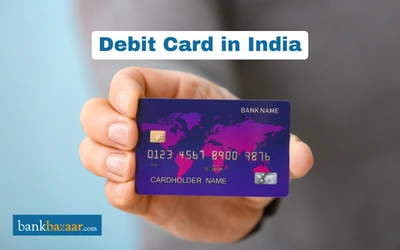
One of the most widely used methods for making cashless purchases is the debit card. Debit cards featuring attractive deals, cashback, and reward points are offered to consumers by several Indian banks. The top debit cards in India are listed here. When you open an account, almost all banks provide you with a free debit card. Only a small number, though, provide excellent services and deals that genuinely differentiate themselves from the competition.
How Does a Debit Card Work?
A debit card is linked directly to your bank account, so it uses the money you already have in it. When you pay at a shop, online, or withdraw cash from an ATM, the bank checks your account balance and immediately deducts that amount. Here’s how you can use it:
- At ATMs: Insert your card into the ATM and choose your account type (Savings/Current), then select the option ‘cash withdrawal’. Enter your 4-digit PIN and the amount you want to withdraw.
- At POS (shops/restaurants): Tap, swipe, or insert your debit card into the POS machine. Enter the amount you want to pay. Then, fill in your 4-digit PIN to confirm the payment.
- Online: While using an online app, select the payment mode as Debit Card. Enter your card details such as card number, expiry date, name on card, and CVV). You will get an OTP on your registered mobile number. Fill in the OTP to complete the transaction.
Best Debit Cards in India in 2026
Some of the best debit cards in India are as follows:
Debit Card | Daily ATM Limit | Daily Shopping Limit | Feature |
IndusInd Grande World Debit Card | Rs.4 lakh | Up to Rs.8 lakh | Earn 5 reward points for every Rs.200 spent on dining, entertainment, flight, hotel, and holidays |
HDFC Platinum Debit Card | Rs.1 lakh | Up to Rs.5 lakh | Offers discounts and cashbacks on popular brands |
ICICI Coral Debit Card | Rs.1 lakh | Up to Rs. 5 lakh | Get 25% off on a purchase of two tickets through BookMyShow |
Axis Prestige Debit Card | Rs.1 lakh | Up to Rs.5 lakh | Get 3% cashback on travel bookings |
Axis Flipkart Debit Card | Rs.50,000 | Up to Rs.5 lakh | Get 5%cashback on Flipkart spends |
HDFC Millenium Debit Card | Rs.50,000 | Up to Rs.3.5 lakhs | Get 2.5% cashback on eligible transactions online |
SBI IOCL Debit Card | Rs.40,000 | Up to Rs. 2 lakh | Earn 6 reward points for Rs.200 spent at IOCL outlets |
SBI Global International Debit Card | Rs. 40,000 | Rs.70,000 | Earn up to 2 reward points per Rs.200 spent |
HDFC Easyshop Platinum Debit Card | Rs. 1 Lakh | Rs. 5 Lakh | Get two Complimentary Domestic Lounge access per calendar quarter |
HDFC Millennia Debit Card | Rs. 50,000 | Rs. 3.5 Lakh | Earn up to 2.5% cashback points on online spending |
Axis Bank Platinum RuPay Debit Card | Rs. 40,000 | Up to Rs. 2 Lakh | Offers such as Airport lounge access, dining discounts, and personal accident insurance coverage. |
SBI Platinum International Debit Card | Up to Rs. 1 Lakh | Up to Rs. 2 Lakh | Earn two reward points on every spending f Rs. 200 |
Kotak 811 #Dream Different Debit Card | Rs. 25,000 | Up to Rs. 1 Lakh | Enjoy discounts and cashback offers on dining, travel, health & fitness, and more. |
Note: The debit card details provided above are updated as of May 2026 and subject to change at the discretion of the respective banks.
Different Types of Debit Cards in India
Here are the six various types of debit cards available in India:
✅Visa Debit Cards
- In India, this is the most often used payment gateway. One of the most widely used credit cards for both online and offline electronic transactions is the Visa. It makes use of the Visa payment gateway, which has excellent security and round-the-clock support.
- There are several varieties of Visa debit cards, including Classic, Gold, and Platinum. These cards provide access to ATMs and online shopping in one location, making them an excellent substitute for cash and bank debits.
✅RuPay Debit Cards
- The National Payments Corporation of India, a state-owned financial services firm, launched RuPay, an Indian payment service provider, in 2016. RuPay cards are issued to clients by numerous public, private, cooperative, and regional rural banks in India.
- It enables users to make domestic purchases, take out cash from ATMs, and make online payments solely inside the country. All ATMs, point-of-sale terminals, and most online retailers in the nation accept RuPay debit cards.
- RuPay has faster transaction completion times and cheaper processing costs than Visa and MasterCard.
✅MasterCard Debit Cards
- One of the most popular credit cards in India is MasterCard. It offers numerous advantages, like cashback and reward points for each transaction, even though it does not have nearly the same network of banks processing payments for you as Visa.
- The cards can be used to make cash withdrawals from any ATM that accepts the MasterCard network in addition to being utilized for both local and international online transactions.
✅Maestro Debit Cards
- In 1991, MasterCard debuted the Maestro card. Similar to MasterCard debit cards, Maestro debit cards are accepted anywhere. Online transactions both domestically and internationally are simple for Maestro Debit card customers.
- They can also take out cash from ATMs anywhere in the world. These cards are renowned for their cutting-edge security features and extremely safe payment system.
✅Contactless Debit Cards
- Contactless cards have gained popularity recently because they do not require the PIN to be entered up to a specific amount. For those who want convenience and wish to make fast payments, contactless debit cards are a great option.
- Unlike conventional debit cards, these don't require you to enter a PIN or give your card to a cashier. This inhibits fraudulent use in situations when the card can be cloned.
- You can pay for transactions using the contactless card by just waving it in front of the point-of-sale terminal. Compared to the swipe approach, you can finish a transaction more quickly, which drastically cuts down on the time needed to complete payments.
How to Apply for Debit Card Online and Offline?
Customers can apply for a debit card through both online and offline processes. Below are the steps for each method:
Steps to Apply for a Debit Card Offline
The process to apply for a debit card offline is as follows:
- You typically do not need to apply separately for a debit card, as it is automatically issued when you open a savings or current bank account.
- If you need a new debit card, visit the nearest branch of your bank. Complete the relevant application form and submit it to the bank manager. You will receive your new debit card within a few days.
Steps to Apply for a Debit Card Online
Many major banks, such as SBI, and Union Bank of India, now allow customers to apply for debit cards online. Below is a step-by-step guide for applying through each bank:
How to Apply for an "SBI Debit Card" Online?
To apply for an SBI debit card online, follow these steps:
- Enter your login, password, and captcha code to access the SBI Net Banking portal
- From the main menu, select the e-Services tab
- Click Request ATM/Debit Card after selecting ATM Card Services
- Decide whether to use your profile password or a One-Time Password (OTP) for verification
- Click Submit after entering the OTP that was sent to your registered mobile number if you choose OTP
- Your bank accounts will be listed. Choose the account you wish to apply for a card for
- Choose the card type and enter the necessary information, such as the name to be printed on the card
- Click Submit to finish the request after carefully reviewing all the information and accepting the terms and conditions
- You will be informed of the time frame for receiving your card once the request has been approved.
How to Apply for a "Union Bank of India Debit Card" Online?
To apply for a Union Bank of India debit card online, follow these steps:
Step 1: Visit the Union Bank of India official website.
Step 2: Click on "Apply for New Debit Card." Enter your account number and the captcha code, then validate your account.
Step 3: You will receive your debit card within a few days.
Note:- If you have an existing union bank debit card, you are not eligible to apply online.
Advantages of Debit Card
Here are the advantages of debit card as follows:
- Since you utilize your own money, there is no debt
- No interest fees
- Simple to use for shopping and ATM withdrawals
- Restricted fees and charges
- Quick approval procedure
Eligibility for a Debit Card
An individual becomes eligible for a debit card upon opening a savings or current account. Below are the additional eligibility criteria to obtain a debit card:
✔️Citizenship Requirements: Must be an Indian citizen
✔️Age Criteria: Must be 15 years of age or older
✔️Documentation Required: Must provide valid address and identity proof to the bank
✔️Financial Requirements: Must meet the minimum balance requirement as per the bank’s terms
✔️Maintenance Charges: Must pay the annual maintenance fee for the debit card, in accordance with the bank's guidelines.
Documents Required for a Debit Card
The Reserve Bank of India (RBI) mandates the submission of certain documents to open a savings account, which are also required when applying for a debit card. Below is a list of essential documents needed to apply for a debit card:
- Recent clicked two-passport-sized photographs
- Proof of identity such as an Aadhaar card, passport, voter ID card, driving licence, etc,
- Proof of address such as driving licence, passport, or voter ID card
- PAN card or Form 16
Debit Card Fees and Charges
ATM or Debit Card fees and charges can differ between cards and banks. Here are the standard fees associated with these Cards in India:
Fee Type | Charges |
Annual Fee | Rs.100 to Rs.1,000 per year |
Card Replacement | Rs.100 to Rs.300 |
Duplicate PIN | Free of cost |
ATM Withdrawal | Free at own bank ATM; Rs.23 per transaction other ATMs (after 5 free trasaction) |
International Usage | Up to 3.5% + taxes |
POS/Fuel Charges | No fee on shopping; 1% surcharge on fuel |
Understanding the Components of a Debit Card
The debit or ATM card consists of the following components:
- Name of the Card Holder
- 16 digits of your card number
- Issue and Expiry Date
- EMV Chip
- Signature bar
- Card Verification Value (CVV)
Debit Card PIN
A debit card PIN (Personal Identification Number) is a 4-digit security code that works as a password to safely authorize ATM withdrawals, online payments, and in-store purchases. In case your debit card gets lost or stolen, you should immediately contact your bank to block it through customer care, mobile app, or internet banking to prevent misuse. After blocking, you can apply for a replacement card by submitting a request or application at the bank branch or online. The PIN helps in ensuring that only the cardholder can access and use the bank account securely for transactions like shopping, bill payments, and cash withdrawals.
Benefits and Features of Debit Card
Depending on the card type, the following are some of the main characteristics and advantages of a debit/ATM card that you can use both domestically and abroad:
- The best substitute for cash is a debit or ATM card since it is immediately connected to your bank account and lowers the possibility of fraud, theft, and abuse
- Simple Access to Your Funds: ATM/Debit cards provide the convenience of immediate cash anytime and anywhere, and there are many ATMs available everywhere
- No EMI or Interest Burden: Since you utilize your own funds for payments and purchases, debit cards do not impose interest or late fees on transactions like credit cards do
- Contactless Payments: Debit cards enable smooth merchant transactions at many Point-of-Sale (POS) terminals across the globe
- Reward Programs: When you use your debit cards to make purchases both online and offline, you can receive cashback, reward points, access to airport lounges, and exemptions of fuel surcharges
- Travel-Friendly: Compared to cash or checkbooks, debit/ATM cards are easier to manage, carry, and use while traveling
- Monitor Your Expenditures Easily: Once authorized, debit cards also assist in monitoring your expenditure with SMS and email alerts.
Debit Card vs Credit Card
Payment cards such as ATM cards, debit cards, and credit cards are provided by banks to their customers so they can conduct particular types of transactions.
Given below are some of the main differences between an debit card and credit card.
Debit Card | Credit Card |
The funds are deducted from your savings account or current account. | The funds are debited from your card issuer through borrowing. |
You can only spend up to the available balance in your bank account. | You can utilize your card within the credit limit assigned to you. |
These cards are typically provided with your salary, current, or savings account. | It is possible to apply for a credit card from any issuer, even if you don't have a bank account with them. |
They offer limited rewards and cashback benefits. | Credit cards provide more extensive rewards and cashback benefits. |
The availability of the EMI facility depends on the agreement between the vendor and the bank. | Credit cards generally offer an EMI facility for transactions above Rs. 2,500. |
Debit card usage does not affect your credit score. | Credit card usage directly affects your credit score |
ATM/Debit cards provide higher cash withdrawal limits. | Credit cards offer additional advantages such as lounge access and protection against lost cards, among others. |
Requires an annual maintenance fee of about Rs. 100 to Rs. 500. | Requires an annual membership fee of about more than Rs. 500. |
Top Debit Card Issuers in India
- SBI Debit Card
- HDFC Debit Card
- ICICI Debit Card
- Axis Bank Debit Card
- YES Bank Debit Card
- Kotak Mahindra Bank Debit Card
- PNB Debit Card
- Canara Bank Debit Card
- Bank of Baroda Debit Card
- Bank of India Debit Card
- Union Bank Of India Debit Card
- HSBC Debit Card
- Niyo Global Debit Card
- AU Bank Debit Card
- IDFC First Bank Debit Card
- Jupiter Bank Debit Card
- DBS Bank debit card
- Karnataka Gramin Bank Debit Cards
- Fi Federal Bank Debit card
- Suryoday Bank Debit Card
Related Articles on ATM Card PIN Generation
- HDFC Debit/ATM Pin Generation through SMS & Online
- Steps to Generate Indian Bank Green PIN
- How to Generate Canara Bank ATM PIN via Net Banking & IVR
- Kotak Debit Card PIN Generation
- How can I Generate Union Bank ATM PIN Online?
- How to Generate Bank of Maharashtra ATM Pin through SMS
- How to Activate Indian Bank ATM Card
- SBI Green PIN
- How to Set UPI Pin without Debit Card in Google Pay & Phonepe
More Articles on Debit Card
- citialert bank
- Hdfc EasyShop Preferred Platinum Debit Card
- Steps to Use Debit Cards to Open a PayPal Account
- City Union Bank RuPay PaySecure
- Paytm Debit/ATM Card
- Electronic Card For Overdraft Account
- Steps to Unblock an ATM Card & Reactivate Debit Card
- ICICI Bank Senior Citizen Gold Debit Card
- ICICI Mumbai Metro Platinum Debit Card
- ICICI Bank DMRC Platinum Debit Card
- Samsung Pay
- How to Block SBI ATM Card?
- Debit Card Fraud - How to Make Transactions Safe on ATM Card
- SBI ATM Card Activation Online
- How to Activate your HDFC Debit Card - Step-by-step Procedure
- Kerala Gramin Bank Debit Card
- ICICI Bank MasterCard World Debit Card


FAQs on Debit Card
1.What is the CVV in the debit card?
CVV full form is Card Verification Value number. It is a 3-digit identification number that is presented on the back side of your card to verify the person's identity.
2.Is ATM card and debit card the same?
No, ATM cards and debit cards are not the same. ATM cards are used to withdraw cash from an ATM machine while debit cards can be used for cash withdrawal and online payments as well.
3.Can ATM card be used as a debit card?
No, ATM cards cannot be used as a debit card. However, a debit card can be used as an ATM card.
4.Can I change my PIN number of my ATM card?
Yes, you can change the PIN number of your ATM card whenever you want.
5.Is there a daily withdrawal limit for ATM cards?
Yes, daily withdrawal limits for ATM cards are set by the banks issuing them.
6.What is a chip card?
A chip card comes with an embedded chip on the front to enhance data security. The Reserve Bank of India (RBI) has directed all banks to switch over to EMV Chip Cards from magnetic strip cards.
7.When will the customer receive a replacement card for the lost one?
A replacement debit card is usually delivered within 7 to 10 working days after the customer reports the card as lost and requests a replacement. The delivery time may vary depending on the bank and location.
8.What does Debit Card Hotlisting means?
Debit cum ATM Card Hotlisting means blocking all the transactions on your card to avoid misusing the card. In simple terms just blocking your card.
9.Will I be charged any fee if I don’t use my debit card for a long time?
Yes, you will be charged an inactivity fee if you don’t use your debit card for a long time.
10.Can multiple accounts be linked to a Debit Card?
Yes, some banks give customers the option of linking several bank accounts to a single debit card.
11.Do banks block Debit Cards if customers enter the wrong PIN during cash withdrawals?
Yes, any bank would block a customer's debit card after three unsuccessful attempts at an ATM as a protective measure.
12.Is the overdraft facility available with Debit Cards?
Overdraft facility is available with the savings account linked to a debit card but is not applicable on a particular card.
13.In India, what are the two types of Debit Cards generally issued to users?
Indian banks offer personalized and non-personalized debit cards. Personalized cards include the user’s name and photo, while non-personalized cards only display the bank logo, card details, and payment network logo.
14.What is the security code on a debit card?
A security code is a 3- or 4-digit Card Verification Value (CVV/CVC) printed on the back of a debit card. It adds an extra layer of protection for online transactions by verifying that you are the one making the purchase.
15.What can I do if the debit card is stolen?
In case your debit card is stolen, you can contact your bank and report the theft. They will cancel your card immediately, and you can apply to get a new one.
16.What is a virtual debit card?
A virtual debit card is a digital version of a physical debit card that can be used to make online purchases or other transactions over the internet.
17.What is the validity of the new debit card PIN?
There is no such specific validity period for newly generated debit card PIN. For the security of the customer’s card details, the bank recommends the users to change the debit card PIN after every two to three months.
18.What is meant by Zero Lost Card Liability?
Zero Lost Card Liability protects you from any financial loss or liability arising from the loss or theft of your card, enhancing overall card security.

Disclaimer
Credit Card:
Credit Score:
Personal Loan:
Home Loan:
Fixed Deposit:


Copyright © 2026 BankBazaar.com.