


What is CVV & How to Know the CVV Number on Debit Card?
The CVV, or Card Verification Value, is a 3- or 4-digit number printed on your debit card that helps ensure secure online and card-not-present transactions. It acts as an extra layer of protection, verifying that the person making the payment physically holds the card.

Card Verification Value (CVV) is printed by the companies that manufacture bank cards on the backside of credit or debit card. This unique number serves as both the card verification code and the card security code.
What is CVV Number?
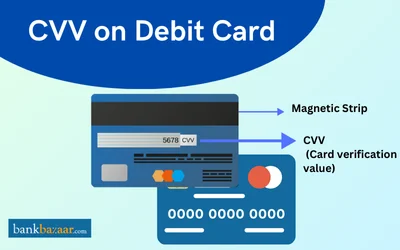
The CVV (Card Verification Value) is a security number which you can find on your debit or credit card. It helps in verifying your identity while doing any online or phone transactions. On Visa and Mastercard cards, it is a 3-digit number located on the back of the card near the signature strip, while on American Express cards, it is a 4-digit number printed on the front. The CVV adds an extra layer of security, and you should always keep it confidential.
What is the Purpose of the CVV Number?
The CVV number on your card is a small but powerful security feature that protects your account. It ensures that a person with a physical card can make online or phone payments. So, in case a hacker knows your card number and expiry date, they cannot complete a transaction without it. Moreover, it also acts as an extra layer of protection which keeps your transactions safe from fraud and unauthorized use.
What are the Components of CVV?
There are two components of CVVs are:
- Magnetic Stripe Data: The magnetic stripe on a card contains all the essential information about the card, like the card number, expiration date, and some encrypted data. When you swipe the card at a POS (Point of Sale) machine, the machine reads this information and sends it to the bank to check if the card is valid and if there’s enough money.
- 3-Digit CVV Code: This 3-Digit code is usually printed on the back side of the card, which helps in verifying the cardholder's identity during online or phone transactions. It ensures that the person making the purchase physically possesses the card.
How to Find CVV on Debit Cards?
The CVV number is mentioned on debit cards as well as credit cards. The person to whom the card is issued is given a unique decimal representation code.
Card Security Code (CSC) or Card Verification Code (CVC) is the name given to the CVV number. MasterCard, Discover, VISA, and RuPay provide this three-digit number. Four-digit numbers are assigned to American Express cards.
Finding the CVV number on a credit or debit card is a simple process. can be found on the back of MasterCard, Discover, VISA, and RuPay cards, either inside or close to the signature strip. The four-digit CVV is located on the front of American Express cards, over the Amex logo.
How Does CVV Work?
- Once the card details and expiration date have been entered into the online merchant site's payment gateway, the CVV should be entered. Payments will not be processed without CVVs.
- Banks keep this basic security layer to mitigate fraud. Hackers can obtain card details that online merchants potentially record. However, Industry Data Security Standards forbid storing CVV numbers.
- Thus, this number cannot be guessed without having access to the card. When making an offline payment or swiping a card, it is not possible to copy the CVV number.
- The POS devices will reject the card if the information on the magnetic chip has changed. Despite the high level of security offered by CVV, credit cards are not impervious to phishing attempts and other types of online fraud.
- Because credit card details can be used by hackers to conduct unauthorised transactions, they are more at risk. When using credit cards, never proceed with a transaction if they lack several layers of verification.
Furthermore, make sure to apply for credit cards with reputable lenders.
How Does CVV Prevent Fraud?
Your CVV number prevents fraud in various ways. These are as follows:
- When you make an online payment, you need to enter a small security code (CVV) from your card. This code ensures that you are a real cardholder.
- Hackers might be able to steal your card number or expiry date, but without the CVV, they usually cannot make online purchases.
- Modern cards have chips that protect against physical card fraud, while the magnetic strip handles offline transactions. Together, they provide extra security.
- The CVV is encrypted and not visible or stored by merchants, which keeps it safe from hackers.
- Some banks offer dynamic CVVs, which send temporary codes via email or text that expire quickly. Even if a hacker gets this code, it will not work for long.
How to Protect CVV?
- Make sure you have an antivirus program installed if you are conducting transactions from your computer.
- When entering credit card information, use trustworthy websites.
- Ignore unsolicited requests for personal information.
- Pay close attention to your account activity.
- Make sure you use a secure Wi-Fi network when conducting transactions.
Dos and Don’ts When Using CVV
- After receiving your card from the bank, sign the back of the card.
- Never give out your CVV number or credit/debit card numbers to anybody, not even bank employees.
- Your One Time Password (OTP) should never be sent to or shared over the phone with anyone else.
- Remember the card PIN and never write it down.
- When entering your PIN, cover the POS PIN pad.
- Avoid conducting financial transactions on public networks, such as free Wi-Fi and internet cafes.
- Avoid using ATMs that are unattended, remote, or poorly lit.
- Keep changing your PINs whenever it's convenient for you.
- Register for email and SMS alerts for any access or debit to your account.
- Refrain from tearing up and discarding the ATM transaction slips.
- The slip's printed information may be misused. Make sure you shred the transaction slips into tiny pieces and discard them.
- To detect dubious transactions, regularly check the transactions listed on your bank statement.
- If you lost a debit or credit card, report it as soon as possible.
- Steer clear of unsolicited texts, calls, or emails that request private financial information such as ATM pins, credit card/debit card numbers, CVVs, expiry dates, or passwords.
FAQs on CVV in Debit Card
1.Can I share my CVV number?
No, you can share your CVV number only when making a payment through reputable merchant gateways.
2.How do I find the CVV number on my debit card?
Debit cards usually have the CVV codes printed on the back, to the right of the white signature strip.
3.Can I find my CVV number online?
No, you cannot CVV numbers online. A CVV number is printed on the back of a debit/credit card. Your CVV cannot be stored by any online gateway.
4.Is CVV required for online payments?
Yes, online financial transactions are not allowed without a CVV. Transactions carried out without a CVV are unsafe and unapproved, and they should be avoided.
5.Are the PIN and CVV numbers on a debit card the same?
No, the PIN will be sent to your registered mobile number via SMS, just like an OTP, while the CVV number is printed on the back of the card.
6.Is my CVV number required for offline transactions?
No, CVV is not required for offline transactions. The POS machine reads your card details automatically, and you only need to enter your OTP or PIN to complete the payment.
7.Can the CVV number have four digits?
The CVV number is typically a three-digit number that appears on the back of your debit card. Each debit or credit card has a different number. In certain rare situations, it might also be four digits.
8.Can I generate the CVV number for my debit card?
No, the card issuer assigns and generates the CVV number. Your debit or credit card number, the card's expiration date, the service code, and other information are used to generate it.
9.What is the purpose of the CVV number?
The CVV number is used to confirm that the transaction is being conducted by the cardholder. Online transactions cannot be completed without entering the CVV number. It serves as an extra security measure and provides protection against fraud.

Disclaimer
Credit Card:
Credit Score:
Personal Loan:
Home Loan:
Fixed Deposit:


Copyright © 2026 BankBazaar.com.